Blog detailed
May 25, 2026 ⋅ POULTRY

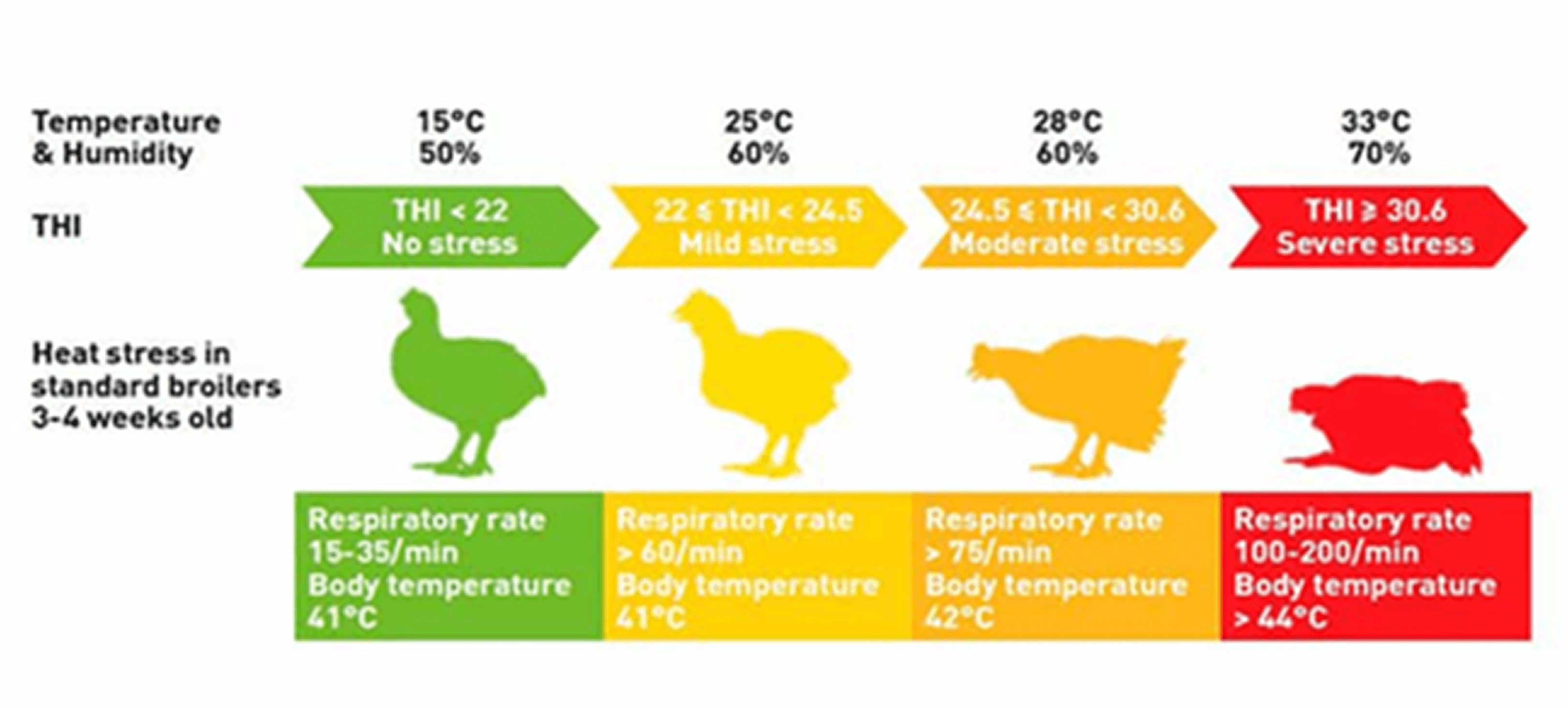
Heat stress is considered a critical obstacle coping poultry farming in hot climate areas, triggering major economic losses in poultry industry. Heat stress starts once the ambient temperature rises above the comfort zone (16°- 25 °C) for poultry conditions are exposed to continues hot environment (over 30 °C), they are inducing stressful behavioural responses to loss heat that exceed the critical temperature, including higher respiratory rate, panting, loss of appetite, and altered metabolism.
Heat stress has negative effects on physiological response, growth performance and laying performance, which appeared in the form of reducing feed consumption, body weight gain, egg production, feed efficiency, meat quality, egg quality and immune response. During periods of hot weather, there is an urgent need to look at useful manipulations to overcome the stress in poultry flocks. Alongside improving the environment of poultry housing, nutritional manipulation can contribute to relieving the negative impacts of heat stress via the understanding of the bird responses to thermal stress at the molecular and cellular levels.
Effects of heat stress in poultry :
1) Effect of heat stress on poultry performance
In broiler chickens affect growth performance, immune responses, nutrients digestibility, meat quality and cellular oxidant/antioxidant system.
While in laying hens, heat stress impairs laying performance, egg production and egg quality.
2) Effect of heat stress on oxidative stress
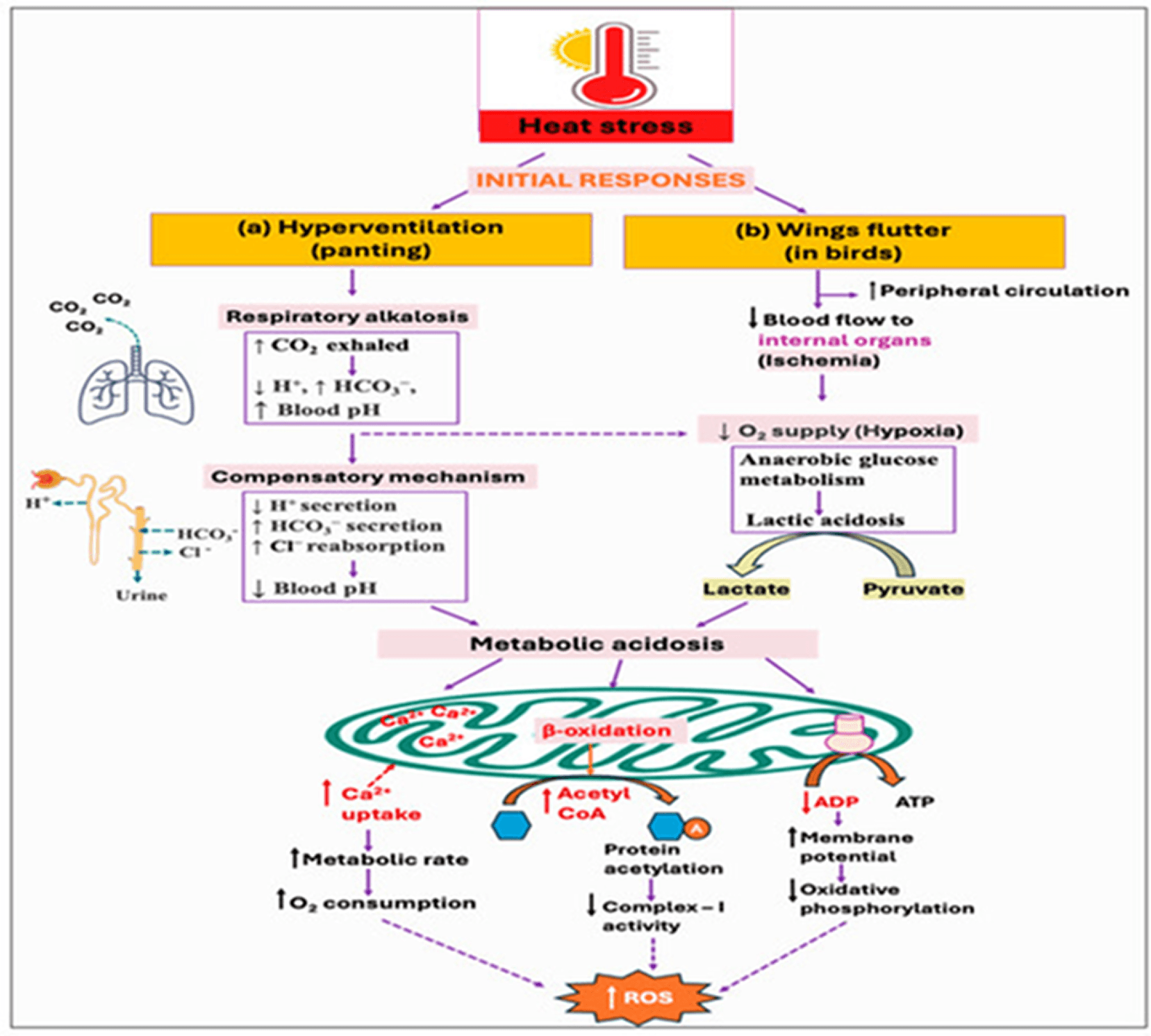
Elevated the body temperature accelerated the metabolic rates leading to raising free radicals (in particular ROS) concentration.
Free radicals destroy cell phospholipid membranes and attack the vital components within the cell which deteriorating muscle membrane integrity, apoptosis and several diseases (El-Deep et al., 2016).
3) Effect of heat stress on immune responses
It impairs humoral and cellular immune responses and causes immune dysfunction (Jahanian and Rasouli, 2015).
Heat stress can suppress the innate immune responses and induce immune disorders via altering the spleen functions, the main location of innate immunity (Ma et al., 2019).
4)Effect of heat stress on meat quality
Exposure to heat stress may result in pale, soft and exudative meat and reduce muscle pH and water holding capacity, motivating consumers to reject meat and subsequently economic loss (Fouad et al., 2016).
5)Effect of heat stress on intestinal integrity and gut microbiota
Heat stress injures intestinal integrity and morphology (Zhang et al., 2017b).
Heat stress causes a serious damage to the intestinal mucosa.
Dietary manipulation for heat-stressed poultry :
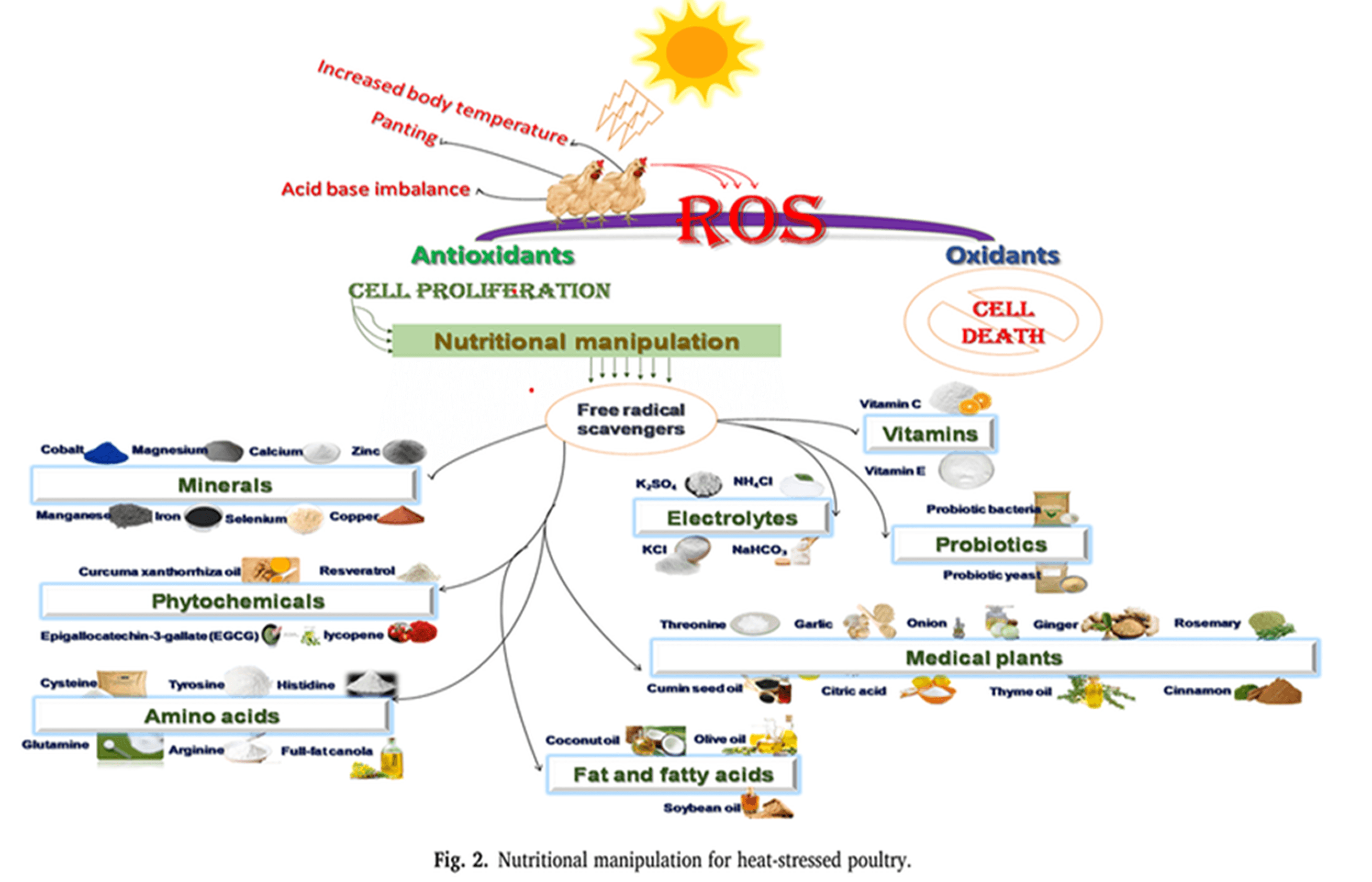
Proper management practices can be complemented by using some vital dietary manipulations to keep good health and performance in poultry flocks during periods of high ambient temperature. These dietary manipulations are feed additives.
Dietary electrolytes could improve blood carbon dioxide, bicarbonate and potassium in heat-stressed bird.
Dietary NaHCO3 supplementation enhanced eggshell quality in layers and growth performance in broilers under heat stress conditions.
Increase fat/oil levels (up to 2–3%) to boost energy density without excessive metabolic heat.
Due to heat stress feed intake reduces so accordingly formulate a diet with densified Energy and Crude Protein considering Dig. Amino acids to meet a bird’s per day requirement.
Betaine: Improves cellular water balance.
Acidifiers help maintain feed efficiency and reduce elevated serum creatinine and uric acid levels, which are commonly increased by heat stress.
Protease: Improves protein digestibility and reduces metabolic heat from protein fermentation.
Phytase: Enhances mineral utilization and reduces anti-nutritional effect
NSP enzymes: Improve energy extraction and gut viscosity
Increase energy density (use of fats) ✓ Reduce heat increment (lower protein excess) ✓ Improve energy utilization via enzymes
Enzymes like glucose oxidase improve nutrient absorption and gut function under varying energy conditions.
Use of synthetic amino acids to maintain performance. Focus on functional amino acids (e.g., threonine for gut health)
Dietary supplementation with antioxidants activates the endogen antioxidant defences and plays a central role in protecting cells from oxidative damage.
Under stress conditions, vitamin E appeared to be the most important natural antioxidants to lower the physiological stress. vitamin E plays an important role through its intra-membrane antioxidant properties (Daghir, 2008).
Supplementation of vitamin C relieved the negative influence on metabolic process, productive performance and boosting immunity in chickens.
Selenium (Se) is an important element that acts as a co-factor for antioxidant enzymes.
Zinc (Zn) is an essential element is involved in suppressing the free radicals by activating the antioxidative enzymes, including GSH-Px, SOD, glutathione S-transferase, and hemeoxygenase-1 (Lee, 2018).
Probiotics can improve poultry performance, intestinal health, intestinal microbial balance and immune responses.


Factors affecting egg shell quality
May 01, 2026 ⋅ POULTRY

Water: The essential and overlooked nutrient in poultry
May 12, 2026 ⋅ POULTRY
Poultry litter management: keeping litter dry
May 18, 2026 ⋅ POULTRY
Nutritional Intervention to manage Heat Stress in poultry
May 25, 2026 ⋅ POULTRY

Welfare of birds in broiler farming and slaughter
June 01, 2026 ⋅ POULTRY

Summer management in dairy cows
June 08, 2026 ⋅ CATTLE

Repeat breeder syndrome in cow
June 15, 2026 ⋅ CATTLE