Blog detailed
June 08, 2026 ⋅ CATTLE

Livestock contributes significantly to worlds economy. India is the largest producer of milk which account 26.67% share of total milk produced globally. Extensive crossbreeding between regional breeds and unremarkable breeds of cattle made such a larger contribution possible. While several environmental factors can affect a dairy animal’s immunological status and milk production, heat stress is the most frequent contributor to animal health issues globally. Summers in India are very harsh as the environmental temperature rises to 45℃. Ambient temperature of dairy animal is 20-30℃. The consequences of climate change not only affect crop output; but they also have an impact on animal production, such as decreased milk yields and quality as well as affect animal health and fertility.
Signs of heat Stress:
Increased salivation i.e. unusual.
Open-mouth panting.
Rapid but weak pulse rate. Increase in other vital parameters (elevated heart rate, respiration rate and rectal temperature).
The animal drinks more water while eating less.
The animal prefers to stand up rather than lie down.
The animal’s body temperature rises (often to 106-108°F).
Dehydration-related dry gums and mucosal membranes.
Animals may show sunken eyes and a faster heartbeat as their dehydration gets worse.
The “skin-pinch” test is an additional technique for determining dehydration. Pinch or “tent” a fold of skin near the calf’s neck to conduct the manoeuvre, then check time how long it takes for the fold to flatten.In typical animals, it takes less than two seconds for it to resume its natural posture.The animal may be up to 8% dehydrated if flattening takes up to four seconds. If it takes longer than that, dehydration has advanced to a more dangerous and potentially fatal stage.
There is an increase in incidence of silent heat.
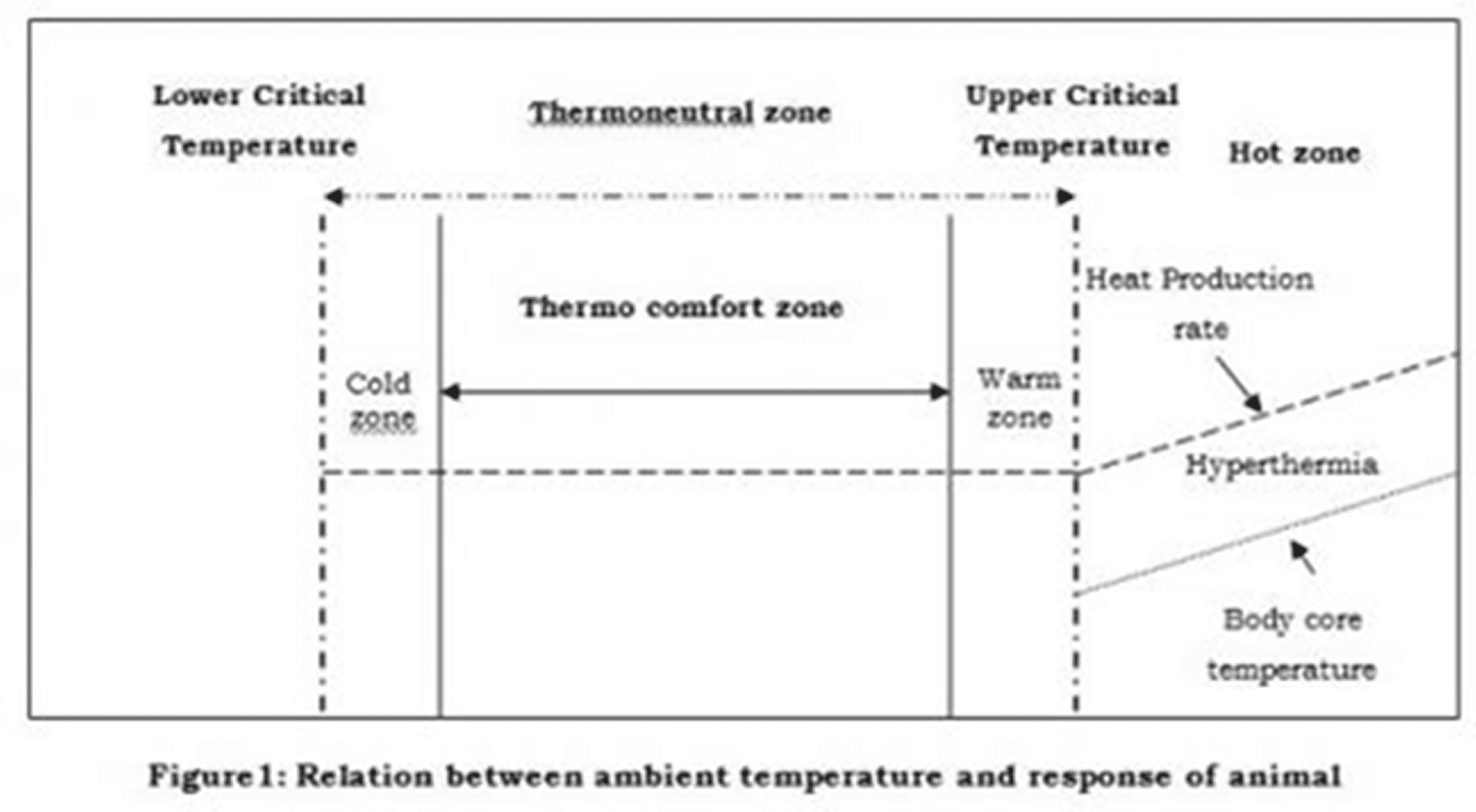
EFFECT OF HEAT STRESS ON ANIMAL PRODUCTION AND REPRODUCTION
Effect on milk production:
The annual total milk loss owing to thermal stress at the national level in India was 0.18 crore tonnes, or around 2% of the nation’s total milk production, totalling a staggering Rs. 2661.62 crores annually. Early lactation saw a 14% decrease in milk supply due to heat stress, whereas mid-lactation saw a 35% decrease. Researchers at the National Dairy Research Institute (NDRI), a forerunner in the field of dairy research, claim that heat stress and poor care of dairy animals during the summer, particularly in May and June, causes a decline in milk production of between 15% and 20% in crossbred cows and between 10% and 15% in buffaloes. It further decreases to 20% to 25% in crossbred cows and 20% in buffaloes during the humid months of July and August.
Effect on reproduction:
In addition to increasing the incidence of anestrous and silent heat in domestic livestock, heat stress shortens and intensifies the estrous cycle and affect follicular growth. Heat stress compromises the physiology of the reproductive system, resulting in hormonal imbalance, decreased oocyte and semen quality and impaired embryo growth and survival. Each unit increase in temperature humidity index (THI) above 70 was found to reduce the percentage of conception rates by 4.6%, while heat stress during pregnancy further slows down the foetus growth and lowers the birth weight.
STRATEGIES TO MITIGATE THE HARMFUL EFFECTS OF HEAT STRESS:
1. Breeding Management:
It is important to install a good heat detection programme to identify cows with minimal heat symptoms since they display less symptoms during heat stress condition compared to thermal comfort periods. Instead of employing bulls to continue breeding, it is usually advised to utilize artificial insemination since in natural breeding. Both bulls and cows have infertility due to summer stress or heat stress. The dairy farmers will benefit from genetic selection of heat-tolerant animals and inclusion of heat tolerance traits in selection programmes.
2. Animal Housing Management
To prevent heat stress, farms and animal housing must have a cooling system. Combining fans with a water sprinkling or water fogging system is the best cooling method. While raising buffaloes special care must be taken as they are more susceptible to heat stress than cattle. Sprinkling too much water is never a good idea since it might cause the animals’ bedding to become too damp, which can cause mastitis and other issues. Farm should have sufficient ventilation. Animal hutches must have an east-west long axis to provide a cooler atmosphere inside. White paint should be used on the roof and exterior walls to reflect up to 75% of the sun’s rays. Animal housing should be constructed of a heavy, insulating material that prevents access to sunlight.
3. Nutritional Management:
Animals under heat stress are more likely to have poor reproductive and productive outcomes. Feed intake decreases during heat stress. Thus, there is an increase in the need for energy and nutrient densities. High-quality forages and nutritious meals will help animals work better and lessen the effects of heat stress. Here are some tips for managing your diet to prevent and treat heat exhaustion:
Offer premium feeds, such as pellet feed or total mixed rations.
Increase feeding frequency, feed during cooler hours of the day, let animals to graze in early morning and late evening only, keep feed as fresh as possible, provide high-quality forage, and reduce the diet’s fibre level.
To increase the energy density of the feed, provide more fat and concentrates.The milk yield and protein content can be improved by using bypass proteins.
To lower oxidative stress and to boost immunity, animals should receive extra minerals (zinc, chromium, and selenium) and vitamins A, C, and E in their diets.
To enhance glucose status, nutrient utilization, and increase feed intake, animal diets should also include rumen fermentation modifiers like monensin and live yeast culture.
The most crucial action that animals may take to combat heat stress is to drink enough cool water. At least 10% of the herd should be able to drink at once from readily available, huge open water troughs.
As the THI gets closer to 80, water consumption rises by up to 50%.
Refilling electrolyte losses with providing electrolytes.
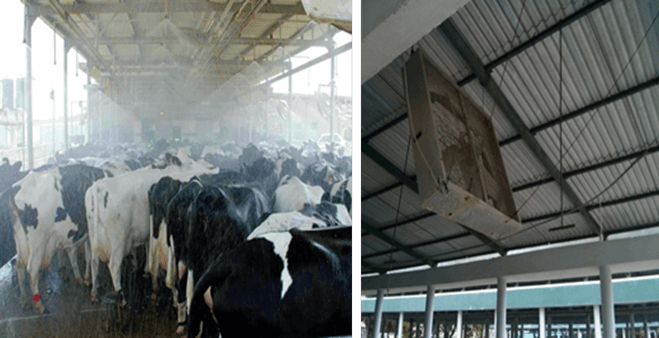
4. Supplying a surface, natural or manufactured
The farms surrounding plantations will aid in lowering the heat stress on the animals. In the modern commercial dairy industry, it is not always practical. Therefore, providing artificial shade in the form of a shade cloth or a naturally ventilated building with open sidewalls can prevent the animals from being exposed to direct sunlight by up to 30%.
Conclusion:
Heat stress has become a serious challenge for dairy producers and causes huge economic losses. Animals are affected very badly due to high environmental temperature as it affects the animal physiology and affects production capabilities. Nutritional and managemental approaches are combinedly used to mitigate heat stress in the summer which reduction the production losses and benefits farmers and dairy industry.


Factors affecting egg shell quality
May 01, 2026 ⋅ POULTRY

Water: The essential and overlooked nutrient in poultry
May 12, 2026 ⋅ POULTRY
Poultry litter management: keeping litter dry
May 18, 2026 ⋅ POULTRY

Nutritional Intervention to manage Heat Stress in poultry
May 25, 2026 ⋅ POULTRY

Welfare of birds in broiler farming and slaughter
June 01, 2026 ⋅ POULTRY
Summer management in dairy cows
June 08, 2026 ⋅ CATTLE

Repeat breeder syndrome in cow
June 15, 2026 ⋅ CATTLE