Blog detailed
June 01, 2026 ⋅ POULTRY

Introduction :
Bird welfare refers to the physical and mental well-being of poultry birds from rearing to slaughter. Proper welfare practices reduce stress, prevent diseases, and improve productivity and meat quality.
Principles of Welfare :
Freedom from hunger and thirst
Freedom from discomfort
Freedom from pain, injury and disease
Freedom to express normal behavior
Housing Management :
Proper housing (1–1.2 sq.ft per bird) ensures good welfare. Adequate ventilation and space prevent overcrowding, stress, and disease. Temperature must be maintained properly, especially during brooding.
Litter Management :
Dry and friable litter prevents footpad dermatitis and ammonia production. Wet litter should be removed and replaced. Lime and super phosphate can be used at 750 g/m²
Brooding Management :
The first 5–7 days are critical. Maintain 32–34°C at chick level and gradually reduce temperature weekly to reach 26–27°C by the 3rd week.
Lighting Management :
Proper lighting regulates feeding, growth, and rest. Excess lighting can cause stress and leg problems.
Nutrition and Water :
Provide continuous clean water and balanced feed. Maintain feeders and drinkers properly and clean water lines regularly.PH of water should be in 6.8 to 7.5 and Hardness of water in the range of 60 to 180 mg/L
Health Management :
Disease prevention through vaccination and biosecurity is essential for maintaining bird welfare.
Welfare During Slaughter :
Identify sick birds before catching.
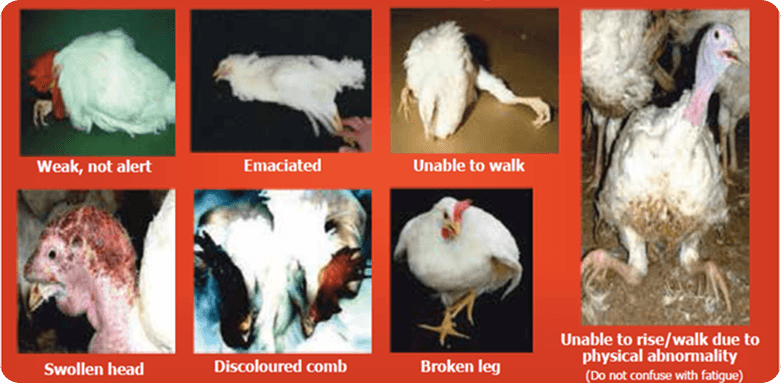
Reduce light intensity and remove feeders before catching. Handle birds carefully to avoid bruises.

Lairage (Holding Area) :
Birds rest after transport to reduce stress. Maintain temperature below 25°C and humidity between 65–75%. Keep birds for at least 30 minutes because lairage allows cooling (with fans and foggers) and stabilization of respiration which reduces transport stress and improve meat quality.
After catching ,birds should place in coops and keep in vehicle.
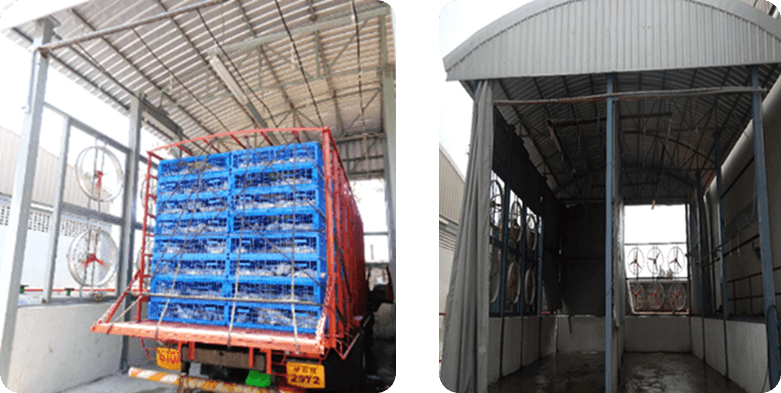
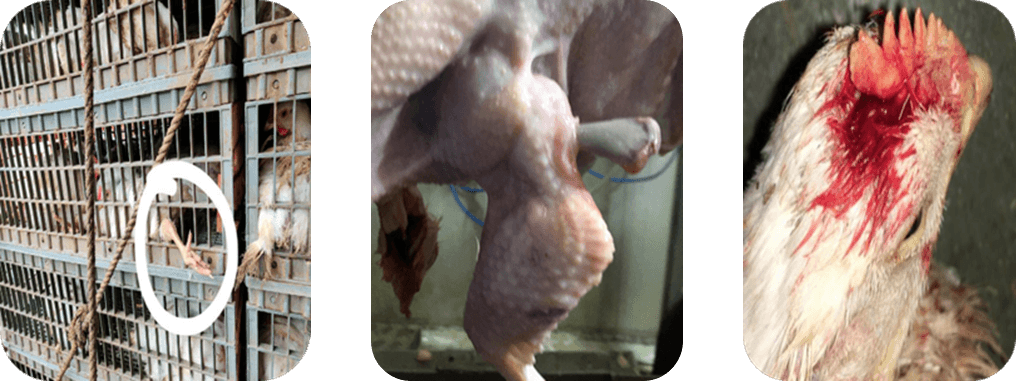
Condition of coops - No sharps,No other objects that cause injury to the birds and bird parts should not stuck in coops.
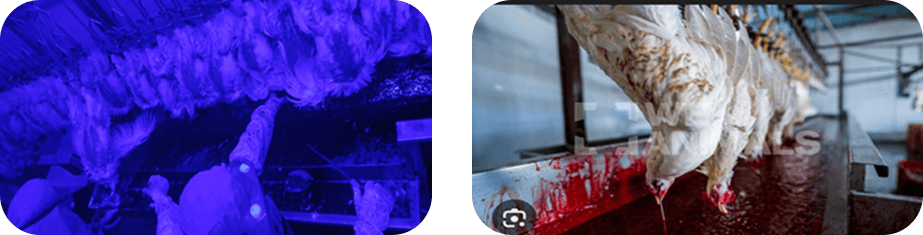
Hanging and Stunning :
Hanging must be done in a calm area under blue light and always follow 2 leg method,provide breast strip to reduce wing flapping of birds to feel settled and balanced.
To render the bird unconscious prior to killing and facilitate bleeding and there are various methods of stunning in poultry processing,Electrical stunning is the most common type of method using in poultry plants because its fast,effective and widely spread,Birds are passed through electrified water bath,current passes through head and brain becomes unconsciousness. Head is the only part to dip in electrical water bath.Voltage,current and frequency of stunner varies depending on line speed
over flow of water from stunner causes prestun shock. If prestun shock occurs severe pain,High pitch vocalization,wing and leg blood clots will occur and meat quality will become less.Birds should always recover after stunning with in 120 seconds

Halal Slaughter :
Halal ensures ethical treatment. Blood must be completely drained. Bleeding time should be at least 180 seconds. Trachea, oesophagus, carotid artery, and jugular vein are cut.
Euthanasia :
Painless killing of a patient suffering from an incurable and painful disease or in an irreversible coma.Cervical dislocation is a humane method of euthanasia in poultry that rapidly induces unconsciousness by damaging the brainstem, ensuring insensitivity to pain without chemical contamination of tissues. It is suitable for small to medium-sized birds and should be performed only by trained and approved personnel in a designated area,The technique involves stretching and rotating the neck near the head to separate the vertebrae from the skull, leading to rapid unconsciousness. Birds are restrained by holding the wings and head firmly, and the procedure is completed with a quick pulling motion (rotate 90 degrees)until dislocation occurs. It is not recommended for large birds like turkeys or for mass euthanasia due to operator fatigue, where alternative methods such as captive bolt or anesthesia are preferred.


Factors affecting egg shell quality
May 01, 2026 ⋅ POULTRY

Water: The essential and overlooked nutrient in poultry
May 12, 2026 ⋅ POULTRY
Poultry litter management: keeping litter dry
May 18, 2026 ⋅ POULTRY

Nutritional Intervention to manage Heat Stress in poultry
May 25, 2026 ⋅ POULTRY
Welfare of birds in broiler farming and slaughter
June 01, 2026 ⋅ POULTRY

Summer management in dairy cows
June 08, 2026 ⋅ CATTLE

Repeat breeder syndrome in cow
June 15, 2026 ⋅ CATTLE